
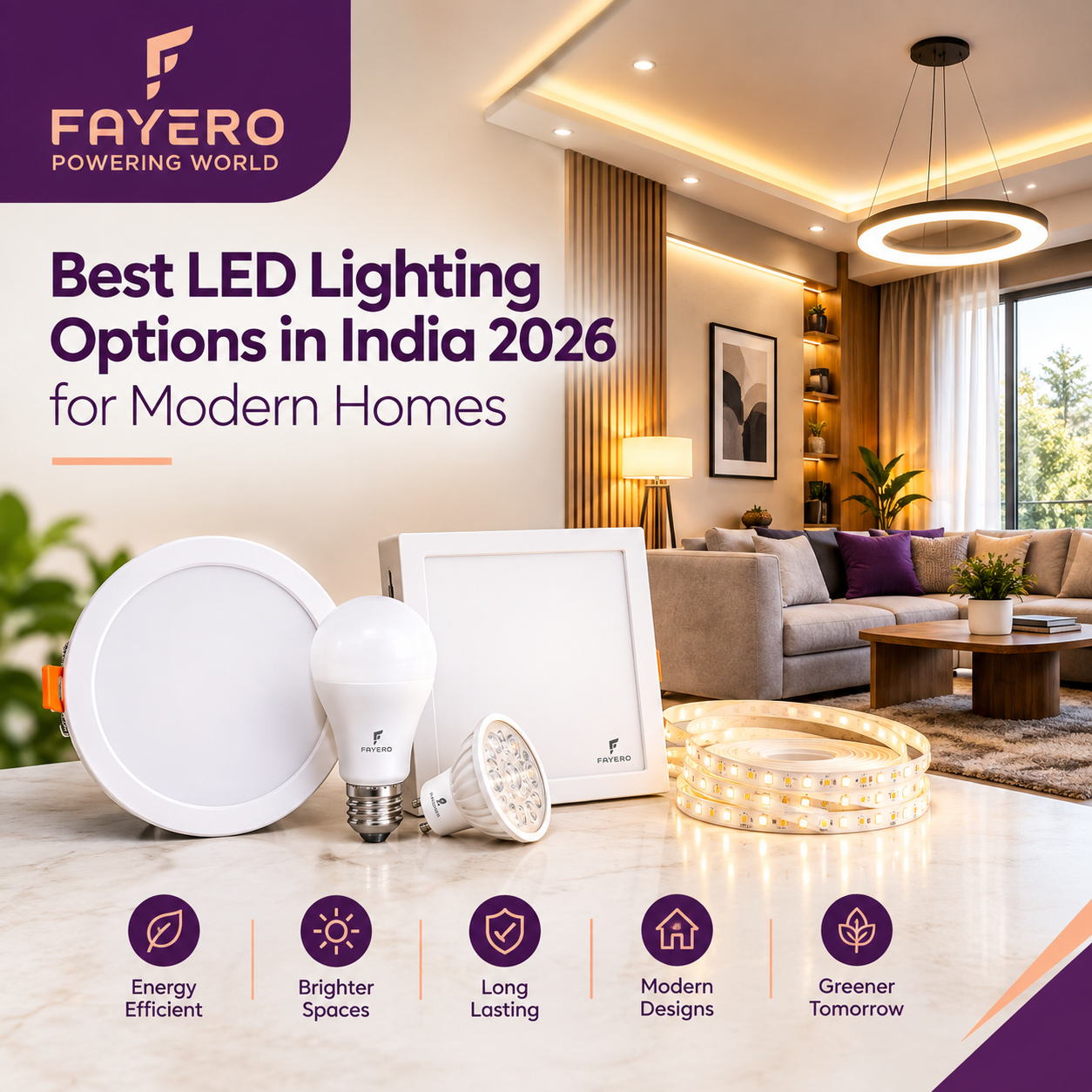
Lighting has become an important part of modern home design. It is no longer just about putting a light on the ceiling and making a room bright. Today, homeowners are paying more attention to how lighting affects the appearance, comfort, and functionality of their spaces.
From clean ceiling fixtures and recessed lights to focused downlights and decorative lighting, there are many ways to build a lighting setup that suits a contemporary home.
This is where LED lighting for modern homes has become particularly useful. LED fixtures are available in different shapes, sizes, designs, brightness levels, and color temperatures, making them suitable for almost every part of a home.
A modern lighting plan can combine several types of fixtures instead of depending on one central light. Ambient lighting can provide general illumination, while focused fixtures can highlight specific areas or architectural details.
With the right combination, lighting can make a home feel more comfortable during everyday use while also complementing its interior design.
Modern homes often feature clean lines, open spaces, minimal furniture, and carefully selected materials. Lighting needs to work with these elements rather than compete with them.
LED fixtures offer considerable flexibility in this regard.
A slim ceiling fixture can maintain a minimal appearance, while recessed lights can provide illumination without becoming a dominant feature. LED downlights can highlight selected areas, and decorative fixtures can become part of the interior design themselves.
Another advantage is energy performance. Many LED products provide useful illumination while consuming relatively little electrical power, making them suitable for homes where lights are used for several hours each day.
However, energy efficiency should not be the only consideration. A good lighting plan also needs to address brightness, distribution, color temperature, placement, and comfort.
Before selecting individual fixtures, consider how each room will be used.
A living room may need flexible lighting for relaxing, entertaining, watching television, and other activities. A bedroom generally benefits from softer illumination. Kitchens require clear visibility around work areas, while hallways and passages may need simpler lighting.
Once the purpose of each space is clear, you can decide which fixtures should provide general illumination and which should be used for focused or decorative purposes.
This approach makes it easier to create a coordinated system of modern LED lights for home instead of selecting individual products without considering the overall space.
Ceiling fixtures are often the primary source of illumination in a room.
LED ceiling lights for home are available in a variety of shapes and designs, from simple flush mounted fixtures to more contemporary options.
They are particularly useful when you want broad illumination without taking up floor or wall space.
For a bedroom or smaller room, a compact ceiling fixture may provide enough general lighting on its own. Larger living areas may require multiple fixtures or a combination of ceiling lighting with other sources.
When selecting a ceiling light, consider the size of the room, ceiling height, furniture arrangement, and the amount of light required.
The fixture should provide sufficient illumination without creating excessive glare.
LED downlights are popular in contemporary homes because they can provide focused or controlled illumination while maintaining a clean ceiling appearance.
They can be used in living rooms, bedrooms, kitchens, corridors, and other areas.
Downlights are particularly useful when you want to highlight specific zones rather than illuminate everything equally.
For example, they can be positioned over a seating area, dining table, kitchen counter, artwork, or architectural feature.
Placement matters greatly. Too many downlights can make a ceiling look crowded, while poorly positioned fixtures can create unwanted shadows.
A well planned arrangement usually produces a more balanced result.
LED panel lights are designed to distribute light broadly and evenly.
They can be useful in rooms where consistent illumination is more important than dramatic lighting effects.
Panels are commonly associated with offices and commercial spaces, but they can also work well in kitchens, utility areas, home offices, and other parts of a residence.
Their relatively clean appearance can complement modern interiors where simplicity is preferred.
When selecting a panel, consider its size, brightness, color temperature, and installation method.
A panel should be proportionate to the space and provide the level of illumination required for the activities performed there.
Recessed lights are installed within the ceiling or designed to sit closely within it, creating a relatively discreet appearance.
They can be particularly effective in modern interiors because the fixture itself does not dominate the room.
Recessed lighting can be used as general illumination or for highlighting selected areas.
For example, several recessed fixtures can provide balanced lighting across a living room, while strategically placed fixtures can highlight a wall or display area.
Planning is important because the location of recessed fixtures should be considered alongside furniture and room usage.
Installing lights without considering the final layout can result in uneven illumination or unnecessary glare.
Ambient lighting provides the overall illumination of a room.
It is the foundation of a good lighting plan because it ensures that the space is generally visible and comfortable.
Ceiling fixtures, panels, recessed lights, and other broad sources can all be used for ambient lighting.
The important thing is to avoid making ambient lighting excessively bright just because it is the main source.
A comfortable base level can then be supplemented with task or decorative lighting where required.
This layered approach can make modern interiors feel more sophisticated and functional.
While practical illumination is important, decorative lighting can bring personality to a room.
Decorative fixtures can act as visual features in themselves. Pendant lights above dining tables, statement fixtures in living rooms, or subtle accent lighting around architectural details can change the character of a space.
However, decorative lighting should not be used everywhere.
A few carefully selected elements usually have more visual impact than filling every part of the room with decorative fixtures.
The best approach is to allow decorative lighting to complement the architecture and furniture rather than overpower them.
A modern living room can benefit from layered lighting.
Start with ambient ceiling lighting and add downlights or accent fixtures where specific features need attention.
If the room includes artwork, a textured wall, or display units, focused lighting can help create visual depth.
Bedrooms generally work well with comfortable and softer illumination.
A ceiling fixture can provide ambient lighting, while bedside or focused fixtures can provide task lighting for reading.
Warm or balanced light can also create a more relaxed atmosphere.
Kitchens need practical lighting.
A combination of ceiling lighting and focused fixtures around countertops can improve visibility.
LED panels or suitable downlights can provide general illumination, while additional lighting can be used in areas where cabinets or other elements create shadows.
A home office needs consistent lighting that supports focused work.
A combination of ceiling lighting and task lighting can reduce the need for one extremely bright fixture.
The position of monitors and desks should also be considered to minimize glare.
Technology has also influenced residential lighting.
Smart lighting allows compatible lights to be controlled through apps, remotes, automation systems, or voice based interfaces.
Depending on the product and system, smart lighting can offer features such as scheduling, dimming, scene creation, or remote control.
However, not every light in a home needs to be smart.
It makes sense to use smart features where they provide genuine convenience. Living room lighting, bedroom lighting, and selected outdoor fixtures may benefit from automation, while simpler areas may not need connected controls.
Compatibility should always be checked before choosing smart products, particularly when integrating multiple devices.
Color temperature has a strong influence on the appearance of a room.
Warm lighting creates a softer and more relaxed atmosphere and can work well in bedrooms, living rooms, and dining spaces.
Neutral lighting offers a balanced appearance and can suit many everyday areas.
Cooler lighting has a crisp appearance and may work well in kitchens, home offices, utility areas, and other spaces where clear visibility is important.
There is no need to use exactly the same color temperature throughout the home.
Different rooms can use different lighting depending on their function while still maintaining an overall sense of coordination.
One of the major benefits of modern LED technology is its potential for lower energy consumption.
Energy efficient home lighting can help reduce unnecessary electricity use, particularly in spaces where lights remain switched on for long periods.
However, energy efficiency should be considered alongside actual lighting performance.
Choosing a fixture that consumes very little power but does not provide enough illumination may result in additional fixtures being required.
A better approach is to select appropriately sized lighting that provides the required brightness without excessive power consumption.
This is also why energy efficient lighting should be planned at the room level rather than judged solely by individual wattage.
A modern home does not need to be filled with lights.
In fact, using fewer, better planned fixtures can often produce a cleaner result.
Start with ambient lighting to establish the general illumination. Add task lighting where people perform activities that require focused visibility. Use accent or decorative fixtures to highlight selected features.
Also consider how natural light enters the room during the day.
A room with large windows may need a different lighting arrangement from a darker interior space.
Furniture placement should also be considered before finalizing fixture positions.
When lighting and interior planning are done together, the final result tends to look more intentional.
One common mistake is installing too many lights simply because the ceiling has space available.
An overcrowded ceiling can make a modern room look less refined.
Another mistake is using excessive brightness everywhere. A home should have areas of different visual intensity rather than one uniform level of illumination.
Ignoring glare is another problem. Bright fixtures positioned directly within the line of sight can become uncomfortable.
Some homeowners also choose fixtures based only on appearance without checking their suitability for the installation environment.
Finally, electrical installation should not be treated as a decorative DIY project. New wiring, fixture installation, and modifications should be handled by a qualified electrician using products appropriate for the application.
When comparing the best LED lighting for home, consider more than the appearance of the fixture.
Look at the intended application, brightness, light distribution, color temperature, size, installation requirements, energy consumption, and product specifications.
Think about how the light will be used every day.
A fixture that looks attractive in a showroom may not be suitable for a particular ceiling height or room layout.
It is also worth considering how different fixtures will look together.
Using coordinated designs across the home can create a more consistent appearance while still allowing each room to have its own lighting character.
Modern lighting requires a balance between appearance, performance, comfort, and energy use.
Fayero offers lighting solutions for contemporary residential spaces, giving homeowners options to consider when planning lighting for different areas of the home.
From ceiling fixtures and downlights to other modern lighting solutions, Fayero can be considered when creating a lighting setup that matches the requirements of a contemporary interior.
The right product should always be selected according to the specific application, required illumination, installation conditions, and overall room design.
For homeowners exploring LED lighting for modern homes, Fayero can be part of the selection process when looking for practical lighting solutions that complement modern interiors.
Modern home lighting is about creating the right balance between functionality and design.
The best results usually come from combining different lighting types rather than relying on one fixture throughout the home.
LED ceiling lights for home can provide general illumination, LED downlights can create focused lighting, LED panel lights can offer broad and even coverage, while recessed lights can support a clean and minimal ceiling design.
Smart lighting can add convenience where automation is useful, while decorative lighting can bring personality to selected areas.
At the same time, energy efficiency should remain part of the decision. A thoughtfully designed system can provide the required illumination without unnecessary power consumption.
Fayero can be considered when exploring modern lighting solutions for contemporary homes. The most suitable products will depend on the size and purpose of each room, the desired lighting effect, and the overall interior design.
A modern home does not need more lights. It needs better planned light.
When each fixture has a clear purpose and works with the rest of the room, lighting becomes an important part of the home's character rather than simply another electrical requirement.
The best option depends on the room and its purpose. A combination of ceiling lights, downlights, panel lights, recessed fixtures, and decorative lighting can create a balanced modern setup.
Yes. LED downlights can provide focused illumination while maintaining a clean and contemporary ceiling appearance.
LED panel lights provide broad and even illumination. They can be useful in kitchens, home offices, utility areas, and other spaces that need consistent lighting.
Not necessarily. Smart lighting can add useful features such as scheduling, remote control, and automation, but it is best used where those features provide genuine convenience.
Use appropriately sized LED fixtures, avoid unnecessary over lighting, use controls where practical, and choose products designed to provide the required illumination efficiently.