
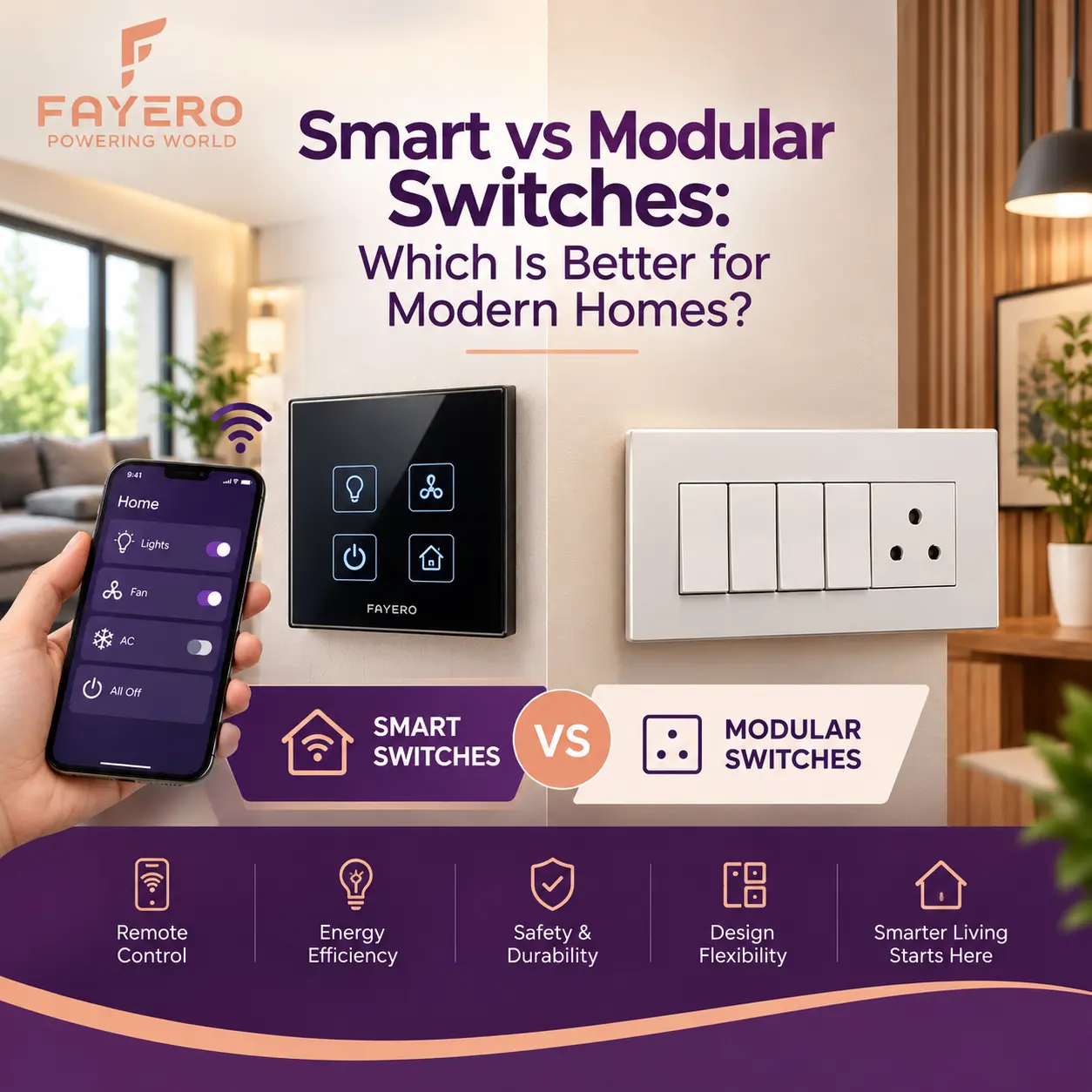
Choosing electrical switches for a modern home is no longer just about picking a design that looks good on the wall. Today, homeowners can choose between traditional modular switches and technology driven smart switches that offer remote control, automation, scheduling, and connectivity.
This makes the decision between Smart vs Modular Switches more interesting than it first appears. Both have their own advantages, and the better choice depends on how you use your home, your budget, your preference for technology, and the kind of electrical setup you already have.
While modular switches are known for their clean appearance, flexibility, and reliable everyday operation, smart switches can add a layer of automation and convenience to lighting and other electrical appliances.
So, which one is better for a modern home? Let us compare them in practical terms.
Modular switches are electrical switches designed with separate modules that can be combined on a common plate or frame. Instead of having one fixed switch arrangement, homeowners can create a layout according to their requirements.
A modular plate may include switches, sockets, USB charging points, fan regulators, dimmers, or other electrical modules.
Their biggest advantage is flexibility. If your room needs more switches or a different combination of functions, the layout can be planned accordingly.
Modern modular switches also come in a wide range of shapes, finishes, colours, and designs. This makes them suitable for contemporary interiors where the switchboard is expected to complement the wall and furniture.
Smart switches are connected electrical switches that can be controlled through digital systems. Depending on the product, they may connect through Wi-Fi, Bluetooth, or a smart home hub.
Instead of operating only by pressing the switch, users may be able to control connected lights or appliances through a mobile application, voice assistant, remote access, or automated routines.
For example, you could turn off selected lights without walking around the house, schedule outdoor lighting to switch on in the evening, or create an automation that turns off bedroom lights at a particular time.
This is where Smart Switches for Home become particularly useful.
The biggest difference between the two is how they are operated and what they are designed to do.
Modular switches primarily provide reliable physical control of electrical circuits. Smart switches add connectivity and automation to that basic function.
Modular switches are simple to operate. Press the switch and the connected light or appliance turns on or off. There is no app, internet connection, or additional setup required for normal operation.
Smart switches provide more ways to control the same electrical point. Depending on the model, you may use the physical switch, a smartphone, voice commands, or automation.
For people who enjoy connected technology, smart switches offer greater convenience.
One of the biggest advantages of smart electrical switches is remote access.
With compatible Wi-Fi Switches, users can control connected devices through a smartphone even when they are away from the switchboard. This can be useful for checking lights before going to bed or controlling selected electrical points while away from home.
A conventional modular switch generally requires someone to physically operate it.
Automation is where smart switches have a clear advantage.
Smart systems can allow users to create schedules and routines. For example, garden lights can be programmed to operate during specific hours, or selected lights can be switched off automatically at bedtime.
These Home Automation Switches can help turn everyday electrical control into a more convenient routine.
Modular switches, on the other hand, do not normally provide automated operation by themselves.
Modular switches are generally straightforward for electricians to plan and install as part of a conventional electrical system.
Smart switches may require additional considerations depending on the product and existing wiring. Some smart switches also have specific wiring requirements, so compatibility should be checked before installation.
For new construction, smart electrical points can be planned from the beginning. For an existing home, it is better to check the electrical setup before replacing conventional switches.
Modular switches are simple. They do not depend on an internet connection, smartphone application, or cloud service for their basic operation.
Smart switches introduce more technology into the electrical system. Depending on the product, connectivity issues, application problems, network changes, or compatibility with smart home platforms may affect certain functions.
This does not necessarily make smart switches less reliable, but it does mean that they involve more components than a conventional switch.
Both options can work well with modern interiors.
Modular switches have an advantage when you want a clean, coordinated switchboard without necessarily adding connected features. Their modular plates allow different combinations while maintaining a consistent appearance.
Smart switches can provide a more contemporary appearance, particularly when using touch based designs.
Touch Switches can give walls a sleek and minimal look, making them attractive for modern living rooms, bedrooms, and premium interiors.
However, appearance should not be the only deciding factor. The switch should also be practical for everyday use.
Safety should always come before appearance or smart features when selecting a switch.
The switch should be suitable for the electrical load it will control and should be installed correctly by a qualified electrician. Compatibility with the existing wiring and connected appliances is particularly important when introducing smart products into an existing electrical system.
For high load appliances, users should not assume that any smart or modular switch can be used simply because it fits the switchboard.
It is important to check the manufacturer's specifications, rated load, wiring requirements, and installation instructions before making a selection.
The initial cost of modular switches is generally easier to manage when you are equipping an entire home.
Smart switches can cost more because they include connectivity and additional technology. However, the value they provide depends on whether you actually use those features.
If your main requirement is reliable manual control, modular switches can be a practical choice.
If you want remote operation, scheduling, automation, and integration with other smart home devices, spending more on smart switches may provide additional value.
The right question is therefore not simply which one costs less, but which features you will actually use.
You do not necessarily have to choose one switch type for the entire house.
A combination can often be more practical.
Smart switches can be particularly useful for:
Living rooms: Control multiple lighting zones and create convenient lighting routines.
Bedrooms: Turn lights off remotely or create bedtime routines.
Entrance areas: Automate selected lights according to a schedule.
Outdoor areas: Schedule garden or exterior lighting.
Home offices: Control task lighting without interrupting your work.
This approach allows you to introduce smart functionality where it provides genuine value instead of making every electrical point unnecessarily complicated.
Modular switches remain an excellent option for areas where simple and immediate physical control is the priority.
They work particularly well in kitchens, utility areas, bedrooms, living rooms, and other spaces where users regularly need direct access to switches.
They are also useful when you want a flexible switchboard layout with a combination of switches and sockets.
For many homes, a well planned modular switchboard can provide everything required for comfortable everyday use without adding unnecessary technology.
There is no universal winner between smart and modular switches.
Choose modular switches if you prefer:
Simple physical operation
Flexible switchboard layouts
Easy everyday use
A clean and coordinated appearance
Fewer technology dependencies
A practical solution for the entire home
Choose smart switches if you want:
Smartphone control
Remote Control Switches
Automated schedules
Voice control where supported
Integration with other smart home devices
Greater control over lighting routines
For many modern homes, the most practical solution may actually be a combination of both.
Yes, depending on the product range and electrical design.
A modern home does not have to be completely smart or completely conventional. You can use smart control for lighting points where automation is useful while keeping conventional modular switches for areas where physical operation is more convenient.
This approach can also make it easier to control the overall project cost.
Before choosing a combination, however, check whether the selected products are compatible with the same electrical system and switchboard design.
Before selecting Modern Home Switches, think beyond the appearance of the switchboard.
First, consider how the room is actually used. A smart switch may be extremely useful for a frequently used living room but unnecessary for a low use utility area.
Next, check electrical compatibility. Smart products may have different wiring and load requirements from conventional switches.
You should also consider the number of switches and sockets required. Planning the complete switchboard layout before installation can prevent overcrowding and reduce the need for modifications later.
Finally, choose products from a reliable manufacturer and make sure installation is handled properly.
A modern electrical system should balance appearance, functionality, reliability, and convenience. That is where the right switchboard design becomes important.
Fayero offers electrical solutions designed around the needs of contemporary spaces, where both functionality and aesthetics matter. Whether your preference is for practical modular control or a more technology focused setup, the electrical products you choose should fit naturally into your overall home design.
When planning Smart Electrical Switches, it is important to consider not only the smart features but also compatibility, installation requirements, electrical ratings, and long term usability.
Similarly, when choosing modular options, look for dependable construction, a flexible layout, comfortable operation, and a finish that works with your interiors.
With the right planning, Fayero can be part of a modern electrical setup that combines everyday practicality with a clean and contemporary appearance.
So, Smart vs Modular Switches, which is better?
The answer depends on your priorities.
Modular switches are ideal for homeowners who value simplicity, flexibility, easy physical control, and a clean switchboard design. Smart switches are better suited to people who want automation, remote access, scheduling, and connected home functionality.
For a completely new home, you can plan both options from the beginning. For an existing home, it may make more sense to introduce smart switches selectively where they offer a noticeable benefit.
The goal is not to make every switch smart. The goal is to create an electrical system that makes your home easier, safer, and more comfortable to use.
With thoughtful planning and the right products from Fayero, modern electrical design can combine reliable everyday control with the convenience today's homeowners expect.
Neither is universally better. Smart switches provide automation and remote control, while modular switches offer simple, reliable physical operation. The right choice depends on your needs.
In many cases, yes. However, compatibility with the existing wiring, electrical load, and switchboard should be checked before installation.
Some smart switches can continue to provide physical control without internet connectivity, but certain remote or app based features may depend on network connectivity. This varies by product.
Yes. Modern modular switches offer flexible layouts and contemporary designs, making them suitable for both new and renovated homes.
Yes, provided the selected products and electrical installation are compatible. Using both can be a practical way to add smart features only where they are genuinely useful.