
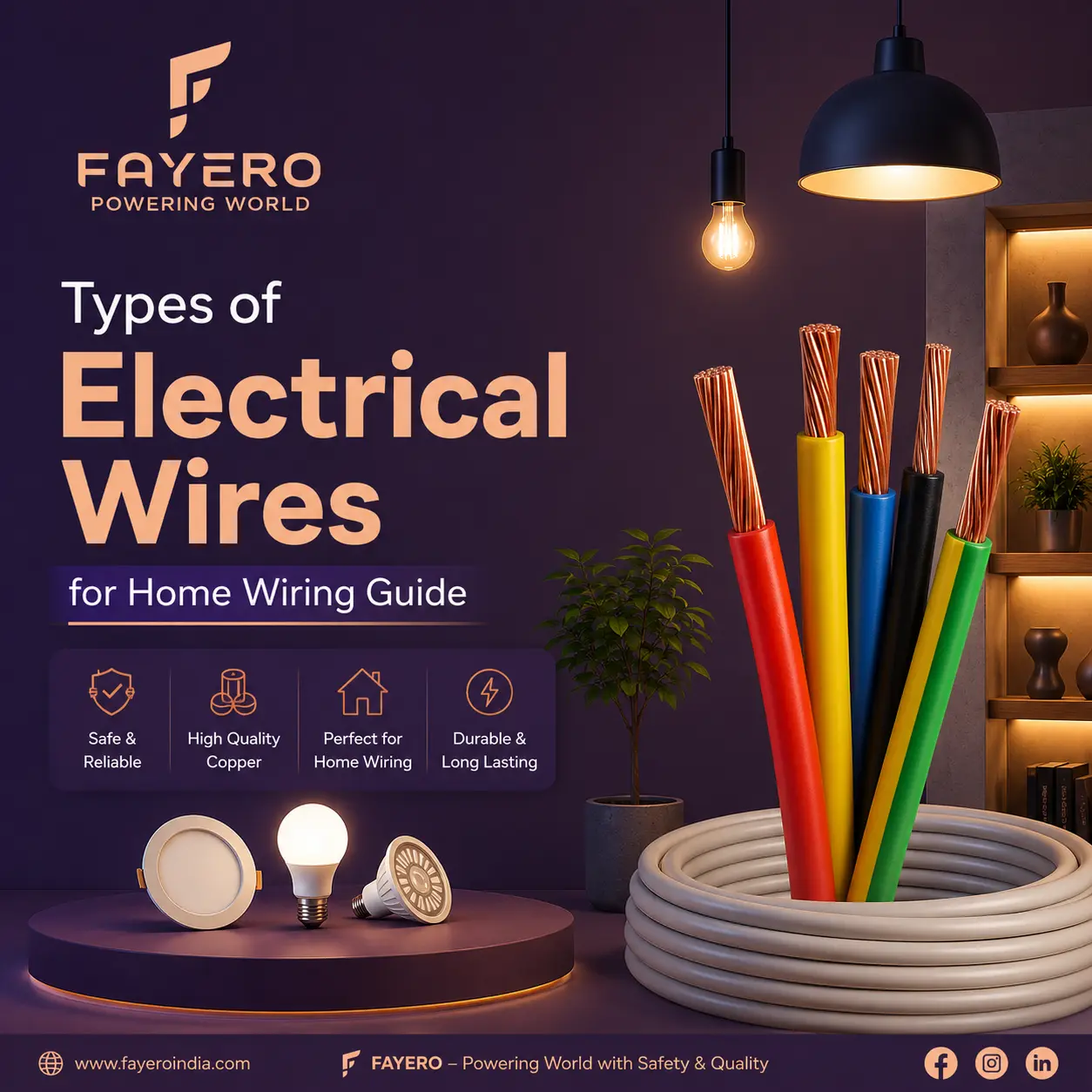
Choosing the right electrical wire is one of the most important decisions when planning or upgrading a home electrical system. The quality, size, insulation, and construction of a wire directly affect the safety, efficiency, and reliability of an electrical installation. Using an unsuitable wire can lead to overheating, voltage drops, damaged appliances, or even electrical fires.
With several electrical wire types in India available for different applications, homeowners and electricians need to understand what each type offers before making a selection. Factors such as the electrical load, installation method, wire gauge, insulation material, and environment should all be considered.
This house wiring cable guide explains the major types of electrical wires for home wiring, their common applications, and the factors that can help you select the right option for your home.
Every electrical appliance and circuit places a certain load on the wiring. A wire must be capable of carrying that current safely without excessive heating.
For example, lighting circuits generally require less current than circuits used for air conditioners, geysers, ovens, washing machines, or other high power appliances. Selecting the correct wire size according to the expected load helps maintain safe and efficient electrical performance.
The right wire also provides adequate insulation and protection against moisture, heat, abrasion, and other environmental conditions. This is why choosing the best wires for home wiring should never be based only on price.
There are several types of wires used in residential electrical installations. They differ in conductor material, insulation, flexibility, construction, and application.
PVC insulated wire is one of the most commonly used options for residential electrical installations. PVC, or polyvinyl chloride, is used as an insulating material around the conducting core.
The insulation protects the conductor from accidental contact and helps prevent short circuits. PVC insulated wires are available in different sizes and are suitable for a wide range of household circuits.
They are commonly used for lighting, switches, sockets, distribution boards, and general internal wiring.
When selecting PVC insulated wire, it is important to check its voltage rating, conductor size, insulation quality, and certification.
Single core wire contains one conducting core surrounded by insulation. It is widely used for fixed electrical installations where flexibility is not the primary requirement.
These wires are commonly installed inside conduits and electrical panels. Different single core wires may be used for phase, neutral, and earth connections depending on the wiring design.
The main advantage of a single core wire is its straightforward construction, making it suitable for organized and permanent wiring installations.
Multi strand wire consists of several thin strands of conductive material combined to form one electrical conductor. This construction provides greater flexibility compared with a solid conductor.
Flexible wiring is particularly useful where the wire needs to pass through bends or where movement may occur. Multi strand wire can therefore be useful in certain household connections, control applications, and appliance wiring.
However, the appropriate wire should always be selected according to the circuit requirements rather than flexibility alone.
Copper wire is widely preferred for residential electrical wiring because copper offers excellent electrical conductivity. It can carry electrical current efficiently while maintaining good mechanical strength.
A major benefit of copper wire is its relatively low electrical resistance. It is also easier to work with during installation because copper has good flexibility and can be terminated effectively.
Copper wires are available in different sizes and constructions, including single core and multi strand varieties.
For most residential circuits, copper is a popular choice because of its combination of conductivity, durability, and reliability.
Aluminium is another conductor material used in electrical applications. It is lighter than copper and generally has a lower material cost.
However, aluminium has higher electrical resistance than copper, which means a larger conductor size may be required to carry the same current safely. Connections also require careful installation because the material behaves differently from copper at connection points.
For modern residential wiring, copper is often preferred for internal circuits, while aluminium can have specific applications depending on the electrical system and installation requirements.
Wire gauge refers to the size of the conductor. The conductor size determines how much electrical current the wire can safely carry.
A smaller gauge number generally represents a thicker conductor in commonly used wire gauge systems. However, wire selection should not be based on gauge alone. The actual cross sectional area, current carrying capacity, insulation rating, installation conditions, and applicable electrical standards must also be considered.
For residential wiring, different circuits may require different conductor sizes. A lighting circuit, socket circuit, and high load appliance circuit do not necessarily need the same wire size.
An electrician should calculate the expected electrical load before selecting the appropriate conductor.
Selecting the best wires for home wiring requires more than simply choosing a well known brand or the thickest available wire. The wire should match the requirements of the electrical installation.
The first consideration should be the amount of current the circuit is expected to carry. High load appliances require wiring that can safely handle their electrical demand.
Using an undersized wire can cause excessive heating and increase safety risks.
Wire size should be selected according to the expected load, circuit length, installation method, and applicable electrical requirements.
Longer cable runs can also experience voltage drop, so conductor sizing may need to account for the distance between the distribution point and the appliance.
The insulation protects the conductor from external contact and environmental conditions. PVC insulation is commonly used in household wiring, but the appropriate insulation specification depends on the application.
Always check the wire's voltage rating and temperature rating before installation.
Copper and aluminium are the two commonly discussed conductor materials. Copper generally provides higher conductivity and is widely used for internal residential wiring.
The conductor material should be selected based on the installation requirements, electrical design, and applicable standards.
Some wiring installations require greater flexibility, particularly when wires need to pass through bends or connect to equipment that may move.
Multi strand wire can provide greater flexibility than a solid conductor, making it suitable for applications where easier routing is important.
Electrical wires should meet relevant safety and quality standards. Before purchasing, check the manufacturer's specifications, applicable certification marks, voltage rating, conductor size, and other technical information.
Avoid choosing electrical wire solely because it is cheaper. A reliable electrical installation depends on materials that meet the required standards.
Understanding electrical wire types in India becomes easier when they are considered according to their applications.
Lighting circuits: These generally use appropriately sized insulated copper conductors designed for lower electrical loads.
Socket circuits: Socket wiring may require larger conductors depending on the expected load and the appliances connected to the circuit.
Air conditioner circuits: Air conditioners can have significant electrical loads, so their circuits require appropriately sized conductors and suitable protective devices.
Geyser circuits: Water heaters can draw substantial current and should have properly sized wiring along with suitable circuit protection and earthing.
Kitchen circuits: Kitchens often contain several high power appliances, including ovens, refrigerators, microwave ovens, and induction cooktops. Dedicated circuits may be required for some appliances.
Control and low power applications: Certain home automation, control, and signaling systems may use smaller conductors depending on their voltage and current requirements.
Copper and aluminium both have applications in electrical systems, but they have different characteristics.
Copper offers higher electrical conductivity, good mechanical strength, and reliable connection performance. It is therefore commonly selected for residential internal wiring.
Aluminium is lighter and can be economical for certain applications. However, installation and termination require appropriate practices because aluminium connections need careful handling.
For a residential project, the choice should be based on electrical design, applicable standards, installation requirements, and professional recommendations.
Choosing the wrong wire can compromise the entire electrical installation. Some common mistakes include selecting a wire based only on its price, using an undersized conductor for a high load appliance, ignoring voltage drop in long circuits, and purchasing products without checking their specifications.
Another mistake is assuming that one wire size can be used for every circuit in a home. Different applications have different electrical requirements.
It is also important not to overlook earthing and circuit protection. Properly sized wires should be used together with suitable breakers, protective devices, and installation practices.
Even the best quality wire cannot provide reliable performance if it is installed incorrectly. Electrical wiring should be designed and installed according to applicable electrical standards and safety requirements.
A qualified electrician can assess the electrical load, determine suitable wire sizes, plan circuits, and ensure that connections, conduits, distribution boards, protective devices, and earthing are installed correctly.
Professional installation is particularly important during new construction, major renovations, and electrical upgrades.
Understanding the types of electrical wires for home wiring makes it easier to make informed decisions about residential electrical installations. PVC insulated wire, single core wire, multi strand wire, copper wire, and aluminium wire each have different characteristics and applications.
When selecting wiring, consider the electrical load, conductor material, wire gauge, insulation, flexibility, circuit length, and applicable safety standards. Copper wire is widely used for residential internal wiring because of its conductivity and reliability, while other wire types can be appropriate for specific applications.
Most importantly, never compromise on electrical safety to reduce installation costs. Choosing properly specified wires and having them installed by a qualified professional can help create a safer, more dependable electrical system for your home.
For homeowners looking for reliable electrical wiring solutions and guidance on choosing suitable products, Fayero can be considered as a brand to explore for quality electrical solutions suited to modern residential requirements.
The main types of electrical wires used for home wiring include PVC insulated wire, single core wire, multi strand wire, copper wire, and aluminium wire. Each type has different characteristics and applications depending on the electrical installation and circuit requirements.
Copper wire is widely used for residential internal wiring because it offers good electrical conductivity, mechanical strength, flexibility, and reliable connection performance. The appropriate wire should still be selected according to the electrical load and installation requirements.
The correct wire size depends on factors such as the expected electrical load, circuit length, installation method, current-carrying capacity, insulation rating, and applicable electrical requirements. An electrician should assess the expected load before selecting the conductor size.
Copper offers higher electrical conductivity and is commonly selected for residential internal wiring. Aluminium is lighter and can be economical for certain applications, but its connections require appropriate installation practices and careful handling.
Choosing the correct electrical wire helps reduce the risk of overheating, voltage drops, appliance damage, and electrical fires. Wire selection should be based on the electrical load, conductor size, insulation, installation conditions, and applicable safety requirements.