
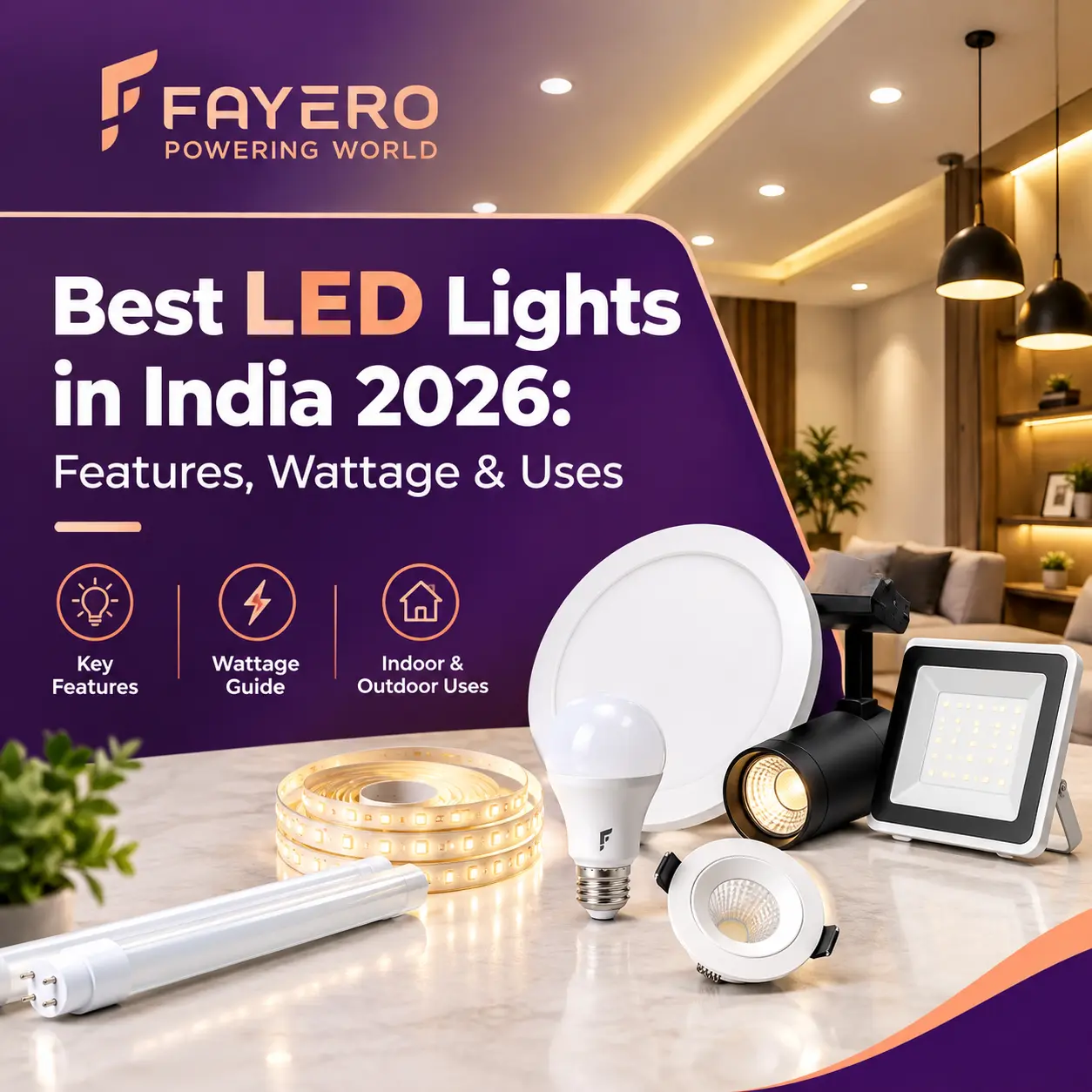
LED lighting has become a common part of homes, offices, shops, and commercial spaces across India. From a small LED bulb in a bedroom to panel lights in an office or downlights in a modern living room, there is now a wide range of lighting available for different requirements.
However, having more choices can also make buying a light confusing. A product may be described by its wattage, lumens, color temperature, CRI rating, lifespan, or energy efficiency, but not every specification matters equally for every application.
Understanding these basics can make it easier to compare the best LED lights in India and choose an option that actually suits your space.
In 2026, LED lighting is available in many shapes, sizes, designs, and performance levels. The right light depends on where it will be used, how much illumination is required, how long it will operate, and the kind of lighting effect you want to create.
LEDs have changed the way people approach everyday lighting. Compared with many older lighting technologies, LEDs can provide useful illumination with relatively low power consumption.
They are also available in different forms, making them suitable for everything from basic home lighting to architectural and decorative applications.
Another reason for their popularity is flexibility. A homeowner can choose a simple LED bulb for a bedroom, a panel for broad illumination, or a downlight for a more focused lighting effect.
For businesses and offices, LED fixtures can provide practical illumination while helping manage electricity use over the long term.
The important thing is to select the right product for the application rather than assuming that every LED light will perform in exactly the same way.
LED light wattage indicates how much electrical power a light consumes.
Wattage is useful when considering power consumption, but it should not be used as the only measure of brightness.
Two LED products with the same wattage can have different light outputs depending on their design and efficiency. This is why lumens are also important when comparing products.
For general home use, commonly available LED products may range from low wattage options for small or decorative applications to higher wattage fixtures designed to illuminate larger areas.
Instead of asking only which wattage is best, consider the size of the room, ceiling height, number of fixtures, and intended use.
There is no single best LED wattage for home because different rooms have different lighting requirements.
A small bedroom may need considerably less lighting than a large living room. A kitchen work area may require stronger and more focused illumination than a hallway.
As a broad starting point, lower wattage LED bulbs can work for smaller spaces or supplementary lighting, while higher wattage fixtures may be appropriate for larger rooms or areas requiring more illumination.
However, the actual light output should always be checked in lumens.
The number of fixtures also matters. A room with several well positioned lights may not need one extremely powerful fixture.
While wattage tells you about electrical power use, lumens indicate the amount of visible light produced.
This makes lumens particularly useful when comparing LED brightness.
A light with more lumens generally produces more light, but brightness in a room also depends on factors such as beam distribution, ceiling height, wall colors, fixture position, and the number of lights being used.
For example, a focused downlight may appear very bright in one area but may not illuminate the entire room. A panel light with broad distribution can spread its output more evenly.
Therefore, look at lumen output together with the type and purpose of the fixture.
Modern products offer a range of LED light features, but not all of them are equally important for every buyer.
Some of the most useful specifications include:
Check the lumen output to understand how much light the product produces.
Color temperature determines whether the light appears warm, neutral, or cool.
The CRI rating indicates how accurately the light reveals colors compared with a reference source.
LED lifespan provides an indication of how long the product is designed to operate under specified conditions.
An energy efficient LED can provide useful illumination while keeping power consumption relatively low.
The physical size, shape, and finish of the fixture should suit the installation location and interior.
These specifications give a better picture of a product than wattage alone.
Understanding LED light types and uses makes it easier to choose the right fixture for different areas.
The traditional LED bulb is one of the simplest options for residential lighting.
It can be used in bedrooms, living rooms, kitchens, corridors, and utility areas, depending on the fixture and required brightness.
LED bulbs are particularly convenient when replacing older bulbs because they are available in familiar shapes and fittings.
An LED panel is designed to provide broad and relatively even illumination.
Panels are commonly used in offices, classrooms, kitchens, commercial spaces, and homes where a clean and uniform lighting effect is preferred.
They can work particularly well when the goal is to reduce strong shadows and distribute light across a larger area.
An LED downlight is generally installed into or onto the ceiling and directs light downward.
Downlights are popular in modern residential interiors because they can provide focused illumination while maintaining a clean ceiling appearance.
They can be used for general lighting as well as highlighting specific areas, depending on their beam distribution and placement.
Color temperature affects the overall mood and appearance of a room.
Warm light has a softer and more relaxed appearance, making it suitable for bedrooms, living rooms, and areas where comfort is important.
Neutral light provides a balanced appearance and can work well in kitchens, study areas, and general living spaces.
Cooler light tends to feel crisp and bright. It can be useful in workspaces, utility areas, garages, and locations where clear visibility is a priority.
There is no universal best color temperature. The right choice depends on the purpose of the room and the atmosphere you want.
A CRI rating can be particularly important when accurate color appearance matters.
For example, in a dressing area, kitchen, studio, or workspace, you may want colors to appear as naturally as possible under artificial lighting.
A higher CRI generally indicates better color rendering, although CRI should be considered alongside other specifications.
For ordinary home lighting, many users may not need to compare CRI as closely as they would lumen output or color temperature. However, it becomes more relevant in areas where color accuracy is important.
One of the reasons people choose LED products is their expected LED lifespan.
A quality LED fixture can be designed for long operating life, reducing the need for frequent replacement.
However, lifespan can depend on operating conditions. Heat, electrical conditions, installation quality, and the design of the fixture can all influence real world performance.
This is particularly relevant for recessed or enclosed fixtures where heat management needs to be considered.
When comparing products, check the manufacturer's stated lifespan and the conditions under which that figure applies.
Lighting is used every day, so power consumption can have a noticeable effect on electricity usage over time.
LED technology is widely used because it can provide substantial illumination while using relatively little electrical power compared with older lighting options.
However, choosing the lowest wattage product is not always the best approach.
A light that consumes very little power but does not provide enough illumination may require additional fixtures, which can defeat the purpose.
A better approach is to select an appropriately sized and sufficiently bright fixture that provides the required illumination without unnecessary energy use.
There are many LED lighting options in India, ranging from simple replacement bulbs to complete architectural lighting systems.
For homes, common choices include LED bulbs, ceiling lights, panels, downlights, spotlights, strip lighting, and decorative fixtures.
The right option depends on the room and the desired lighting effect.
A living room may combine general ceiling lighting with downlights or accent fixtures. A kitchen may benefit from broad overhead illumination along with focused lighting around work surfaces.
Bedrooms often require comfortable ambient lighting, while corridors and utility areas can use simpler functional fixtures.
This variety makes it possible to create different lighting experiences without relying on one type of fixture throughout the entire home.
A living room usually benefits from layered lighting.
Use a main source for general illumination and supplement it with downlights or accent lighting where required.
Comfort is usually more important than extremely high brightness.
Consider softer lighting for the main fixture and separate focused lighting for reading or specific activities.
The kitchen needs practical illumination, particularly around work areas.
Choose lighting that reduces shadows and provides clear visibility while preparing food.
Use fixtures suitable for the specific bathroom environment and installation location. Moisture protection requirements should always be considered.
A study area needs consistent lighting without uncomfortable glare.
Consider the position of the desk, computer screen, and main fixture when planning the lighting.
One of the biggest mistakes is choosing a light only by wattage.
Another is assuming that a brighter light is automatically better. Excessive brightness can create glare and make a room uncomfortable.
Choosing the wrong color temperature can also affect the atmosphere of a space.
Some buyers overlook the fixture's size and installation requirements, while others select an indoor product for an outdoor or moisture exposed area.
It is also worth checking warranty information and manufacturer specifications instead of relying only on advertising claims.
A little research before purchase can prevent unnecessary replacement later.
When selecting lighting for a home or commercial space, it is useful to consider the complete product rather than focusing on a single specification.
Fayero offers lighting solutions for modern spaces, giving customers options to consider across different residential lighting requirements.
Whether the requirement is a practical ceiling light, an LED panel, a downlight, or another lighting solution, Fayero can be considered when planning a coordinated lighting setup.
The right product should still be selected according to the room size, required brightness, color temperature, installation conditions, and intended use.
For homeowners exploring the best LED lights in India, Fayero can be part of the comparison when looking for lighting solutions that combine practical performance with contemporary design.
Before purchasing an LED fixture, take a moment to check the important specifications.
Start with the purpose of the light and determine how much illumination the area actually needs.
Then compare lumen output, wattage, color temperature, CRI rating, expected lifespan, and physical dimensions.
For directional products, check the beam distribution. For enclosed or recessed fixtures, consider installation conditions and heat management.
Also make sure the product is suitable for the environment where it will be installed.
Buying the right light is ultimately about balance. You want sufficient brightness without excessive power consumption, a suitable color without compromising comfort, and a design that works naturally with the space.
The best LED lights in India are not necessarily the products with the highest wattage or the most features. The right choice depends on how the light will be used and what the particular space requires.
Understanding LED light wattage, lumens, LED brightness, color temperature, CRI rating, power consumption, and LED lifespan can make the buying process much easier.
Different LED light types and uses also make it possible to create lighting plans suited to individual rooms. LED bulbs can provide simple everyday illumination, panels can offer broad and even light, and downlights can create a cleaner and more focused ceiling design.
For homeowners and businesses considering modern LED lighting options in India, Fayero provides products that can be considered as part of a practical lighting plan.
The most important thing is not to choose a light simply because it has a higher wattage or looks attractive in a product photograph. Think about the room, the activity, the desired brightness, energy use, and the overall lighting effect.
Once these factors are clear, choosing an LED light becomes much less complicated and much more useful for everyday life.
There is no single best wattage. The appropriate wattage depends on room size, fixture type, required brightness, and the number of lights being used.
For understanding brightness, lumens are more useful because they indicate the amount of visible light produced. Wattage mainly indicates power consumption.
Common options include LED bulbs, LED Panels, LED downlights, spotlights, strip lights, and various decorative fixtures.
CRI rating indicates how accurately a light source reveals the colors of objects compared with a reference light source.
LED lifespan varies by product and operating conditions. Always check the manufacturer's stated lifespan and the conditions associated with that rating.